Introduction
Fashion has always mirrored the social, political, and economic climates of its time. Few events in human history have had as transformative an impact on society and daily life as the two World Wars. While war often brings destruction and hardship, it also acts as a powerful force for change. From revolutionizing gender roles to introducing utilitarian design, the First and Second World Wars left a lasting legacy on the world of fashion.
- World War I (1914–1918): Practicality Over Elegance
- The End of Edwardian Excess
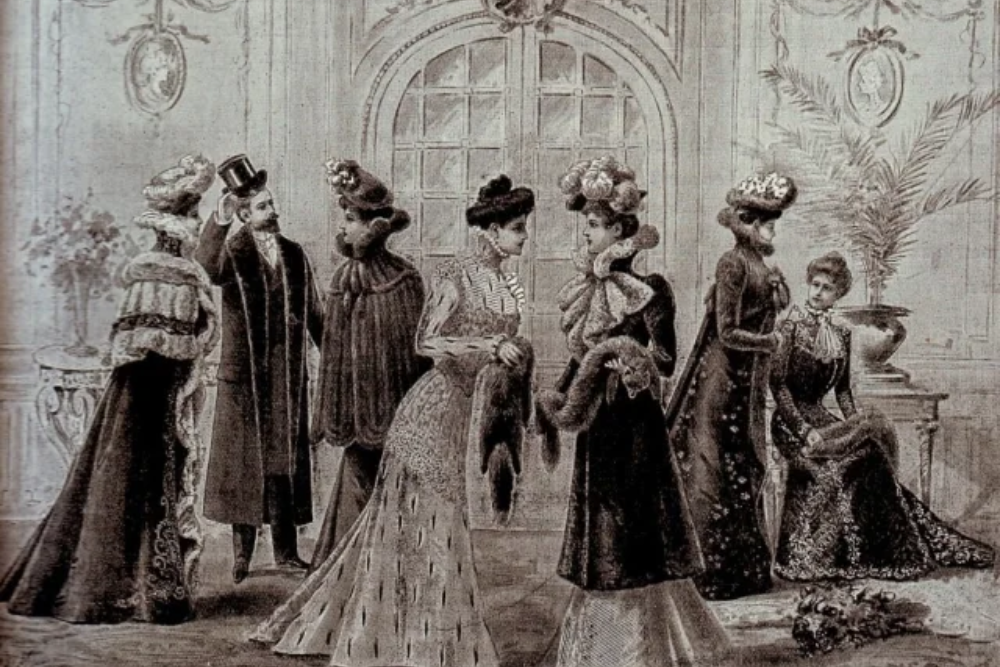
Before World War I, fashion—particularly in Europe—was still dominated by the Edwardian style. Women wore tightly laced corsets, floor-length skirts, puffed sleeves, and elaborate hats. Clothing was formal, decorative, and often uncomfortable. However, as war broke out in 1914, everything changed. The demands of wartime life began to replace luxury with practicality. Social structures shifted, and so did the very fabric of fashion.
- Women Enter the Workforce
As men left for the battlefield, women stepped into their roles in factories, transport, and healthcare. This shift in responsibility was revolutionary—and fashion had to adapt.
- Corsets were abandoned in favor of looser, more flexible clothing.
- Skirts became shorter and narrower, allowing greater movement.
- The popularity of shirtwaists (a type of blouse) grew, paired with ankle-length skirts.
- Trousers, once taboo for women, began to appear in certain work environments.
- Fabric Rationing and Simple Designs
Material shortages due to wartime needs meant that fabric had to be conserved. The lavish detailing of pre-war garments was now considered inappropriate and wasteful.
- Clothes were simplified, often handmade or altered from older items.
- Dark colors and muted tones dominated, both out of mourning and practicality.
- Embellishments like lace and beads vanished; decorative trims gave way to clean lines.
- The Interwar Period (1919–1939): A Fusion of Freedom and Glamour
Though not a war period itself, the time between the two world wars reflects how the aftermath of WWI influenced fashion’s evolution.
- The Flapper Revolution
In the 1920s, a wave of liberation swept through society—especially among women who had tasted independence during the war. This era birthed the flapper, a fashion-forward, rebellious symbol of change.
- Hemlines rose to the knee.
- Dresses became loose and drop-waisted.
- Short haircuts like the bob became fashionable.
- Makeup, once deemed improper, became mainstream.
The fashion of the 1920s reflected a generation breaking away from tradition, embracing modernity and rejecting old societal norms.
- Economic Collapse and Elegant Survival
The 1930s saw the Great Depression, which dampened the extravagance of the previous decade. But the fashion world responded with creative resilience:
- Gowns emphasized the natural waistline and had more flowing, feminine cuts.
- Hollywood glamour influenced fashion trends with stars like Greta Garbo and Joan Crawford.
- Despite economic difficulty, fashion became an escape into elegance for many.
III. World War II (1939–1945): Uniformity, Utility, and Innovation
If World War I introduced practical fashion, World War II cemented it. The second global conflict saw even more widespread transformation in how people dressed—marked by rationing, functionality, and innovative design.
- Utility Clothing and Rationing
With countries diverting resources to the war effort, fashion faced intense regulation. In the UK, the government introduced the Utility Clothing Scheme in 1941, ensuring that clothing was:
- Durable and made with minimal fabric waste
- Designed with no unnecessary pleats, pockets, or buttons
- Affordable and standardized for mass production
This created a kind of national uniform—functional and conservative. Similar policies were implemented across Europe, where “Make Do and Mend” became a patriotic slogan. Women were encouraged to repair old clothes, repurpose curtains into dresses, and knit socks for soldiers.
- The Rise of Women in Uniform
The image of women in military or factory uniforms was a defining symbol of WWII. Whether in Britain’s Women’s Land Army, the American WAVES, or working in munitions factories, women wore:
- Trousers, overalls, boiler suits
- Sturdy leather boots
- Headscarves and turbans (especially the iconic “Rosie the Riveter” look)
This was a radical departure from traditional femininity—and an important precursor to the normalization of women wearing pants.
- Hairstyles and Makeup as Morale Boosters
Despite austerity, personal grooming remained vital. It was seen as a way to boost morale and maintain a sense of normalcy and dignity.
- Red lipstick was considered patriotic in the U.S.
- Hairstyles like the victory rolls became iconic.
- Many women used boot polish for eyeliner and beetroot juice for blush, showcasing wartime ingenuity.
- Post-War Fashion Boom: Luxury Returns
After the war ended in 1945, the world craved beauty, optimism, and indulgence. The response was instant and dramatic.
- The “New Look” by Christian Dior (1947)
French designer Christian Dior launched his “New Look” in Paris—a direct rejection of wartime austerity. The look featured:
- Voluminous skirts that used yards of fabric
- Cinched waists
- Soft shoulders and femininity redefined
While some criticized it as wasteful so soon after the war, it was a smash success—signaling the return of luxury, sensuality, and prosperity.
- Influence on Men’s Fashion
Men’s fashion also evolved:
- Wartime uniforms inspired double-breasted suits, epaulets, and trench coats.
- The zoot suit, with exaggerated proportions, became a cultural statement among African American and Latino communities.
- Post-war men’s suits became more relaxed, yet dignified, favoring gray tones, wide lapels, and clean tailoring.
- Long-Term Impacts of the World Wars on Fashion
- Permanent Shift Toward Practicality
Both wars proved that fashion didn’t need to be restrictive or ornamental to be powerful. The move toward practical, wearable clothing stayed even after peacetime returned.
- Ready-to-wear clothing became more popular.
- The idea of seasonal trends began to emerge.
- Clothing became less class-dependent, more accessible to the middle and working classes.
- Women’s Fashion Freed Forever
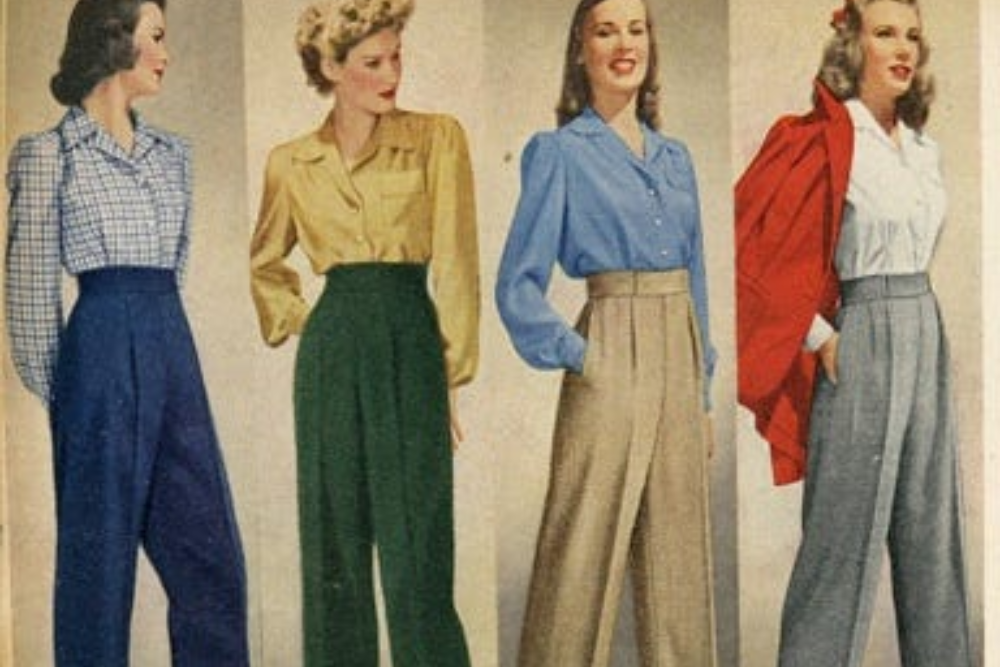
One of the most lasting changes was in women’s roles and dress. The wars legitimized women wearing trousers, tailored jackets, workwear—and the idea never went away. By the 1960s and beyond, women were embracing fashion as a statement of freedom, gender identity, and power—a journey that began on the battlefronts and factory floors of wartime.
- Function Meets Fashion
World War-inspired garments became fashion staples:
- Trench coats (from WWI)
- Bomber jackets and combat boots (from WWII)
- Peacoats, berets, cargo pants, and even aviator sunglasses all trace their roots to military utility.